


Table of Contents
The engineering of automotive friction materials is a delicate balancing act. Modern brake pads must deliver consistent stopping power across a wide temperature spectrum while minimizing rotor wear, reducing noise, vibration, and harshness (NVH), and complying with strict environmental regulations. Within this complex matrix of resins, fibers, and lubricants, Iron Pyrite (FeS2) has emerged as an indispensable functional filler and friction modifier.
For friction material manufacturers and automotive engineers, understanding the precise thermal, chemical, and physical behavior of iron pyrite is critical. This guide explores the mechanical advantages, technical specifications, and formulation dynamics of utilizing high-purity iron pyrite in OEM and aftermarket brake pads.
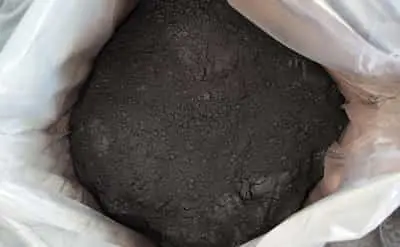
Why Iron Pyrite is Essential in Friction Formulations
Iron pyrite is far more than a simple volumetric filler. It is an active component that fundamentally alters the tribological properties (the science of interacting surfaces in relative motion) of the brake pad during high-stress braking events.
1. Superior Thermal Regulation and Heat Dissipation
During heavy braking, localized temperatures at the pad-rotor interface can exceed 600°C (1,112°F). If this heat is not managed, the phenolic resin binders within the pad will begin to degrade, leading to a dangerous phenomenon known as "brake fade," where stopping power is catastrophically lost.
Iron pyrite possesses excellent thermal conductivity compared to standard organic fillers. It acts as a thermal bridge, drawing heat away from the friction surface and distributing it throughout the backing plate and caliper mass. This delays the onset of resin degradation and ensures a stable coefficient of friction (COF) even during aggressive driving or heavy commercial use.
2. Anti-Glazing Properties and Rotor Care
One of the most common causes of brake squeal and reduced performance is "glazing"—the formation of a smooth, hardened, glass-like layer on the pad surface due to trapped heat and melted resins.
Iron pyrite acts as a mild, controlled abrasive. At microscopic levels, its angular particle structure continuously scrubs the surface of the brake rotor. This scrubbing action achieves two critical goals: it prevents the buildup of the glazing layer on the pad itself, and it conditions the cast-iron rotor surface by removing uneven transfer films, thereby maintaining a consistent friction baseline.
3. High-Temperature Chemical Synergies
Iron pyrite undergoes a beneficial chemical transformation at elevated temperatures. As the brake pad heats up, the FeS2 oxidizes. This localized oxidation process consumes a portion of the frictional heat (an endothermic-like effect at the micro-level) and produces iron oxides (such as Fe3O4). These resulting iron oxides further contribute to the friction coefficient, effectively meaning the pyrite continues to enhance stopping power even as its chemical state shifts under extreme stress.
4. Eco-Friendly Copper and Asbestos Replacement
With the implementation of global environmental standards, such as the Better Brakes Law in the United States and similar REACH regulations in Europe, heavy metals (specifically copper) and asbestos have been heavily restricted or outright banned in friction materials. Iron pyrite has proven to be an environmentally safe, highly effective substitute, providing many of the thermal and friction-stabilizing benefits previously reliant on environmentally hazardous materials.
Technical Specifications for Friction-Grade Iron Pyrite
Not all iron pyrite is suitable for automotive applications. The material must be meticulously milled and purified to ensure it integrates seamlessly into the friction matrix without causing structural weaknesses.
Unlike the lumpy grades used in steel smelting, brake pad manufacturing requires a highly refined powder.
Ideal Procurement Matrix for Friction Materials
| Specification Parameter | Required Standard | Impact on Brake Pad Performance |
| Sulfur (S) Content | 45% - 50% | Ensures optimal chemical reactivity and thermal behavior. |
| Particle Size (Mesh) | 200 to 325 Mesh (45-75 µm) | Guarantees even dispersion within the resin; prevents "hot spots" and structural fracturing. |
| Moisture Content | < 1.0% | Prevents steam pockets during hot-pressing; avoids premature degradation of the phenolic resin. |
| Silicon Dioxide (SiO2) | < 3.0% | Excessive silica makes the material too abrasive, leading to accelerated rotor wear and high NVH (squeal). |
| Morphology | Angular / Crystalline | Provides the necessary microscopic "bite" for anti-glazing and friction stabilization. |
Formulating with Iron Pyrite: Matrix Compatibility
Integrating iron pyrite into a semi-metallic or low-metallic brake pad formulation requires precision. Because it is a dense mineral (Specific Gravity ~4.9 - 5.2 g/cm³), the mixing process must account for potential settling.
Manufacturers must ensure that the dry blending process is thorough enough to coat the pyrite particles evenly with the phenolic resin binder. If the powder is too coarse, it can create stress concentrations within the pad, leading to cracking under hydraulic pressure. If it is too fine (nano-scale), it may agglomerate, defeating its purpose as an even thermal dissipator.
The industry standard of 200 to 325 mesh provides the perfect middle ground, allowing the pyrite to lock mechanically into the aramid, steel, or ceramic fiber matrix while maintaining its individual particle integrity.
Driving Forward with Data-Backed Materials
The transition toward safer, more efficient, and environmentally compliant automotive components demands rigorous material selection. Iron pyrite (FeS2) stands out as a highly engineered friction modifier that actively combats brake fade, prevents glazing, and stabilizes the coefficient of friction under intense thermal loads. By sourcing strictly controlled, high-purity fine pyrite powders, manufacturers can significantly elevate the safety profile and lifespan of their braking systems.