


Table of Contents
For modern foundries and casting shops, achieving the perfect balance of machinability and structural integrity in steel and iron is a daily challenge. A critical factor in this process is the controlled addition of sulfur to form manganese sulfide (MnS) inclusions, which act as chip breakers during machining.
However, a common dilemma arises in the procurement phase: should you choose Pyrite Lumps (Iron Disulfide) or standard Iron Sulfide (Ferrous Sulfide)? Balancing material costs, sulfur absorption rates, and impurity control is essential for maximizing casting margins. In this guide, we break down the technical differences between these two common sulfur enhancers to help your casting shop make the most cost-effective choice.
The Core Dilemma: Balancing Cost and Absorption Rate in Casting Shops
Procurement managers in the metallurgy sector often face a trade-off. While high-purity synthetic sulfurizers guarantee consistent results, their premium pricing heavily impacts the cost per ton of molten metal. On the other hand, low-grade natural ores risk introducing harmful impurities (like phosphorus and excess moisture) and suffer from low sulfur recovery rates, leading to excessive slag formation and higher consumption.
The goal is to find a sulfurizer that provides predictable solubility, high sulfur yield, and low operational cost. This is where comparing the exact properties of Pyrite Lumps and Iron Sulfide becomes critical.
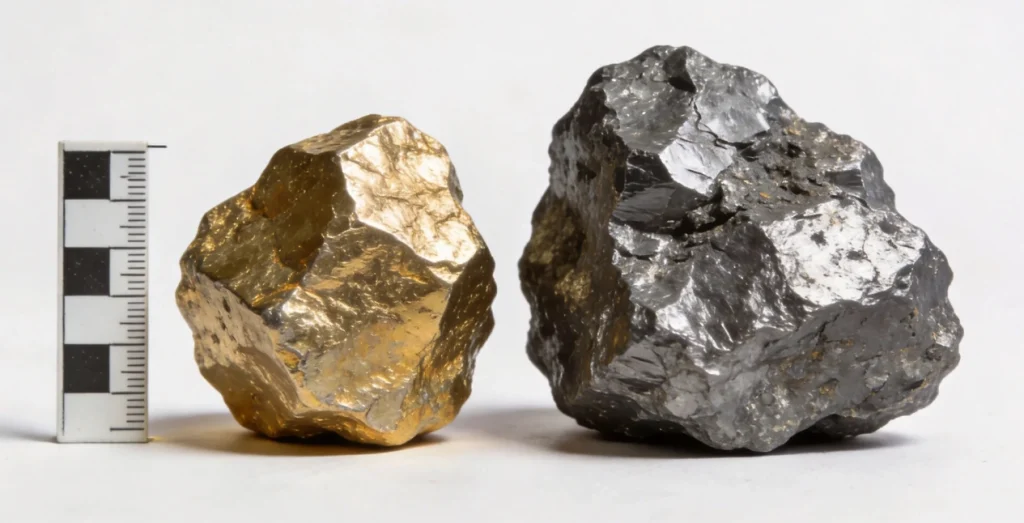
Physical and Chemical Properties: Pyrite Lumps (FeS2) vs. Iron Sulfide (FeS)
Understanding the thermodynamic behavior of these materials in a high-temperature furnace requires a look at their chemical makeup.
- Pyrite Lumps (Iron Disulfide - FeS2): Premium industrial pyrite naturally boasts a much higher sulfur content. High-grade pyrite lumps typically offer S ≥ 48% and Fe ~ 44%. Its melting point sits at approximately 1171°C. When introduced to high heat, FeS2 exhibits a unique thermal decomposition behavior, releasing highly reactive elemental sulfur before fully melting, which drastically improves its interaction with molten iron.
- Iron Sulfide (Ferrous Sulfide - FeS): Standard iron sulfide has a lower theoretical sulfur ceiling, usually maxing out around 28% to 32% in commercial grades. Its melting point is slightly higher, at roughly 1193°C. Because it is already a stable compound (FeS), it does not have the same aggressive two-stage decomposition as FeS2, which impacts how quickly it dissolves in the melt.
Practical Application in Casting: Dissolution, Absorption, and Machinability
How do these numbers translate to the foundry floor?
The Dissolution Trajectory: When Pyrite Lumps are added to the furnace, the thermal shock causes the FeS2 to break down into FeS and atomic sulfur. This localized release of atomic sulfur creates a micro-environment of high concentration that dissolves rapidly into the molten steel. As a result, Pyrite Lumps consistently demonstrate an absorption rate exceeding 85% to 90% under properly controlled slag conditions.
Conversely, standard Iron Sulfide requires more thermal energy to fully liquefy and disperse. This slower dissolution trajectory often means more of the material gets trapped in the slag layer, lowering the overall sulfur recovery and requiring the foundry to use more material per batch.
Improving Machinability: By ensuring a high and consistent sulfur absorption rate, Pyrite Lumps allow for the uniform distribution of Type A MnS inclusions. This prevents the formation of brittle iron carbides, drastically reducing tool wear during CNC machining and extending the lifespan of cutting tools.
Procurement Advice: Sizing Recommendations for Different Furnaces
Even with the right chemical composition (S ≥ 48%), physical sizing is paramount. Selecting the wrong lump size can lead to severe oxidation losses or furnace damage.
Based on our export experience to global casting facilities, we recommend the following specifications based on your melting equipment:
- Medium Frequency Induction Furnaces: Induction furnaces rely on electromagnetic stirring. Large chunks take too long to melt and can damage the refractory lining, while fine dust simply burns off into the exhaust system. For these setups, we highly recommend crushed pyrite in 3-15mm or 10-30mm sizes to balance surface area and sink rate.
- Electric Arc Furnaces (EAF): EAFs generate intense top-down heat and handle larger capacities. They can easily accommodate larger raw materials. For EAF operations, standard 10-50mm Pyrite Lumps are ideal. This size prevents dust losses during mechanical charging and ensures the material penetrates the slag layer efficiently.
Conclusion
For casting shops aiming to optimize their raw material supply chain, Pyrite Lumps (FeS2) offer a clear technical advantage over standard Iron Sulfide. With a lower melting point, higher active sulfur content, and superior absorption rates, high-grade pyrite is the ultimate cost-reduction tool for producing premium free-cutting steels.
When sourcing your next batch, always verify the size consistency and demand a verified COA to ensure harmful impurities like Phosphorus remain strictly within casting tolerances.